
 Image 1 of 1
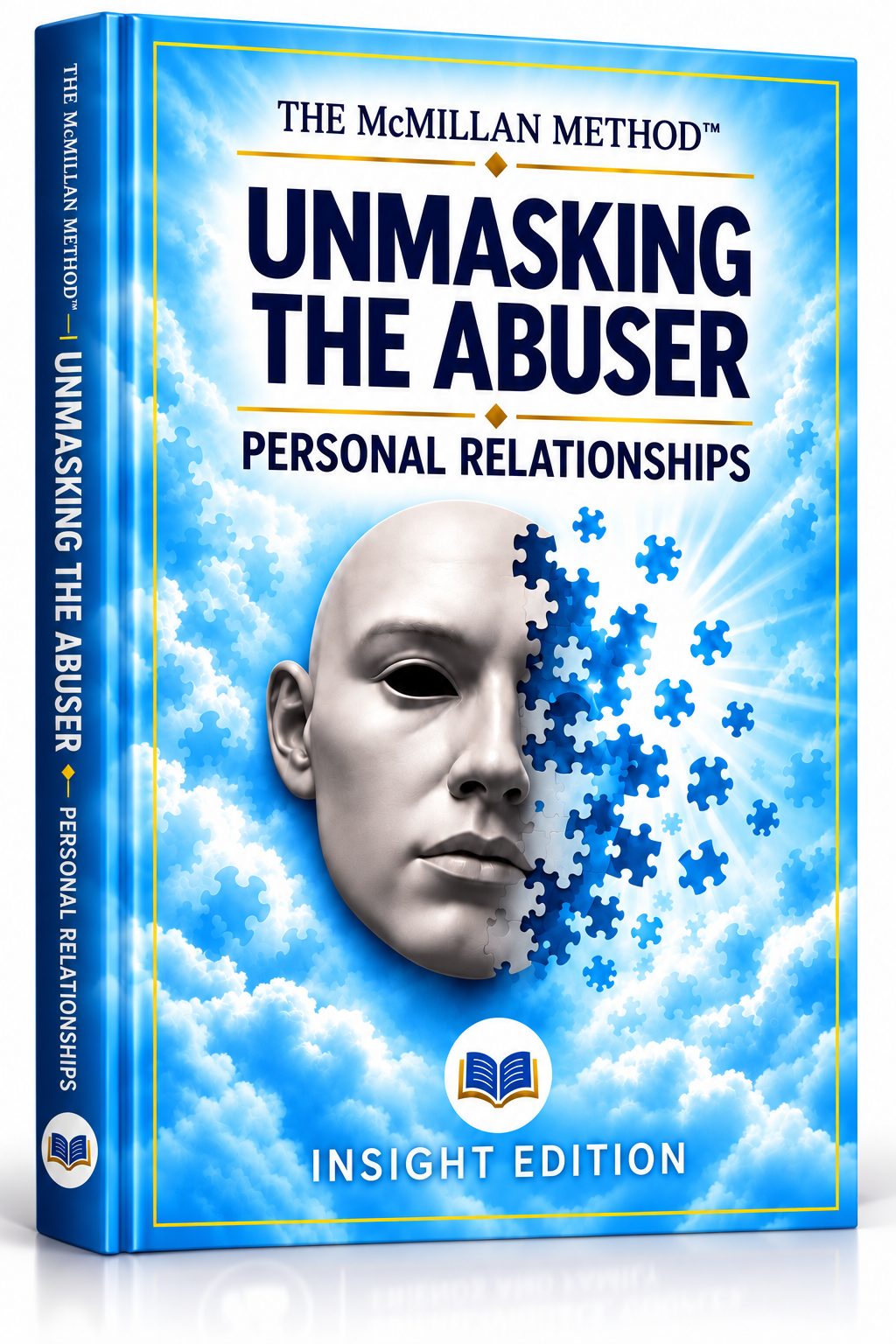
Unmasking the Abuser™ — Personal Relationships Insight Edition
What it is: A deeper exploration of how manipulation and control develop, take hold, and continue affecting life after a relationship ends. Connects Early Detection, Inside the Relationship, and After the Relationship to help you understand the patterns behind your experiences.
Who it’s for: Anyone dating, in a relationship, or recovering from one who wants a fuller understanding of manipulation, control, and their impact. Read it independently or alongside the three personal relationship Assessments and Score Guides.
How did a relationship that once felt so promising become something you had to organize your life around?
Perhaps the hardest part is the contradiction. The person who made you feel understood also learned exactly where criticism would hurt. Help became dependence. Closeness became constant availability. Peace increasingly depended on anticipating what they wanted.
The Unmasking the Abuser Personal Relationships Insight Edition explores how these processes can develop, take hold, and continue affecting life after the relationship ends.
It connects Early Detection, Inside the Relationship and After the Relationship, giving you a fuller understanding of the patterns behind individual experiences.
You’ll explore:
Selection and seduction: how an approach may be tailored to someone’s circumstances, hopes, strengths or vulnerabilities.
Love Bombing and Hurt Bombing: how intimate knowledge can inform both compelling affection and pointed attacks on confidence.
The Dream and Future Shock: how a promised life—or a frightening picture of life without the person—can influence present decisions.
Testing and Training: how repeated pressure, consequences and restored warmth can teach someone to comply before another request is made.
Feeding the Weeds: how apparent loyalty can encourage responses that damage outside support and opportunity.
Adaptive constriction: how choices become smaller as daily life is organized around avoiding consequences.
What can outlast separation: learned reactions, familiar interpretations and practical ties that deserve their own attention.
The edition explains fourteen core tactics, plus gaslighting, recruiting allies, DARVO and scapegoating. Examples and McMillan Method insights help you examine what happened, what followed, and what changed.
It also explains why the good moments belong in the evidence.
You don’t have to declare every affectionate experience false to take control seriously. The important questions concern how warmth, help, apologies and promises operate within the wider pattern.
You’ll learn ways to separate observations from explanations, consider what genuine change would look like, and take the right material to an appropriate professional.
Knowledge becomes more useful when it informs how you understand a situation and consider your response. This edition gives you concepts and questions you can return to as circumstances change.
Looking Doesn’t Mean Leaving.
Our goal is to help you see the patterns in your relationship, understand what they mean, and offer guidance, if you choose, as you decide on your next steps.
Created by Dr. Dina McMillan. Digital educational resource, readable independently or alongside the three personal Assessments and their Guides. Those products are sold separately. Not therapy, a diagnosis or a prediction of danger.