

Dina McMillan, Ph.D.
Social Psychologist • Public Speaker• Author • Facilitator• Educator• Researcher
Based in Nashville, Tennessee after two decades in Australia • Available for engagements worldwide
Helping people understand relationships—and see what others miss.
For more than twenty-five years, American social psychologist Dr. Dina McMillan has studied the relationships that shape people's lives: what makes them healthy, what makes them harmful, why important patterns are so easily overlooked, and what helps people make better decisions once they recognize them.
Her work combines behavioral science with an unusual depth of real-world experience, including more than 4,500 interviews with victim-survivors and more than 700 in-depth interviews with perpetrators of abuse, along with decades of work spanning relationships, courts, government, law enforcement, professional education, community organizations and public education.
Today, that body of knowledge forms the foundation of The McMillan Method—an evidence-informed approach designed to help people recognize meaningful patterns, understand what those patterns may reveal, and use that knowledge to make better decisions in their relationships, workplaces and lives.
The McMillan Method is new. The expertise behind it is not.

Research Is Only Useful If People Can Use It.
Much of what psychology has discovered about relationships and human behavior never reaches the people who could benefit from it most—or reaches them in a form that's difficult to apply to everyday life.
Dr. McMillan's work has taken a different path.
For more than twenty years, she has focused on translating complex research and real-world behavioral evidence into information people can actually use: what to notice, what questions to ask, which patterns matter, and when seemingly small behaviors may be telling you something important.
That approach helps people move beyond instinct, assumptions and explanations to examine the evidence in front of them.
Whether the question involves a romantic partner, family member, friend, colleague, manager—or even their own choices—the objective is the same:
See more clearly before you decide what something means or what to do about it.
SEE
Recognize patterns, behaviors, strengths, risks and warning signs that are easy to overlook.
UNDERSTAND
Learn what the evidence may mean and distinguish isolated incidents from meaningful patterns.
ADDRESS
Turn insight into action through practical guidance, strategies, education, tools and support.
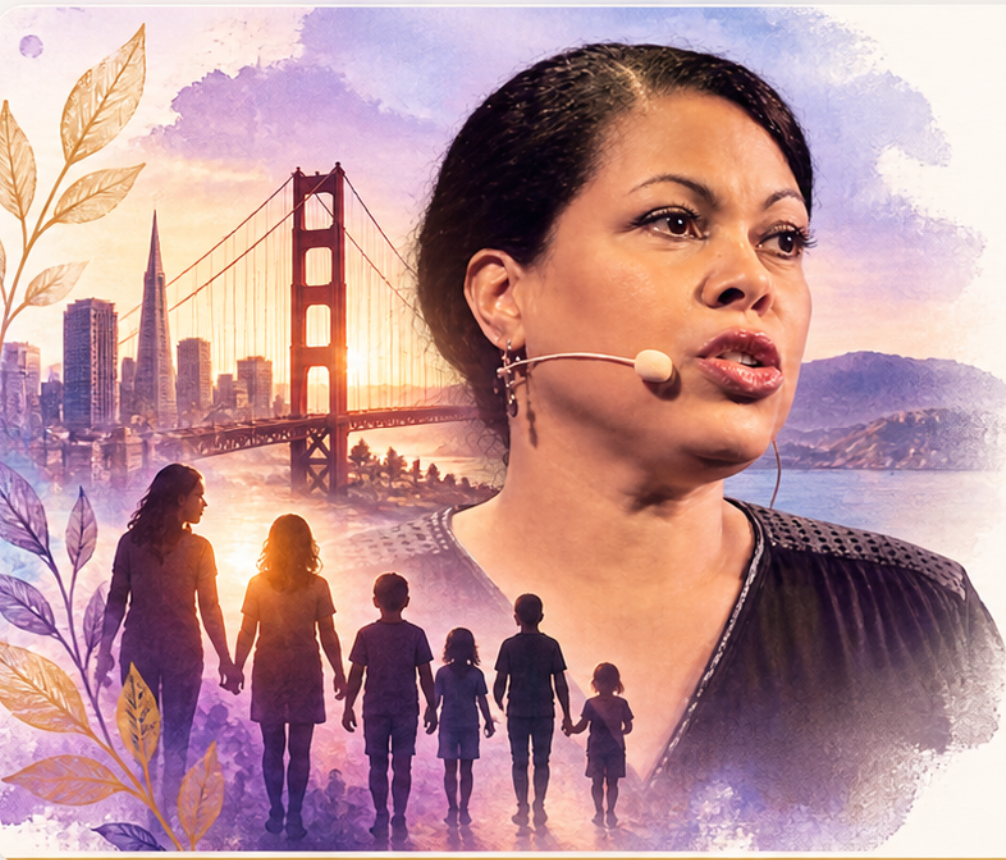
Dr. McMillan earned her Ph.D. in Social Psychology and M.A. in Sociology from Stanford University, following a B.A. in Sociology, summa cum laude, from Hunter College in New York, where she was elected to Phi Beta Kappa.
Her graduate research included work with homeless and at-risk families in the San Francisco Bay Area, where domestic violence emerged as an important contributor to family instability and homelessness.
That experience helped focus her attention on a question that would influence much of her subsequent work:
Why are harmful interpersonal patterns so difficult to recognize while they're happening—and what could people be taught that would help them see danger earlier?
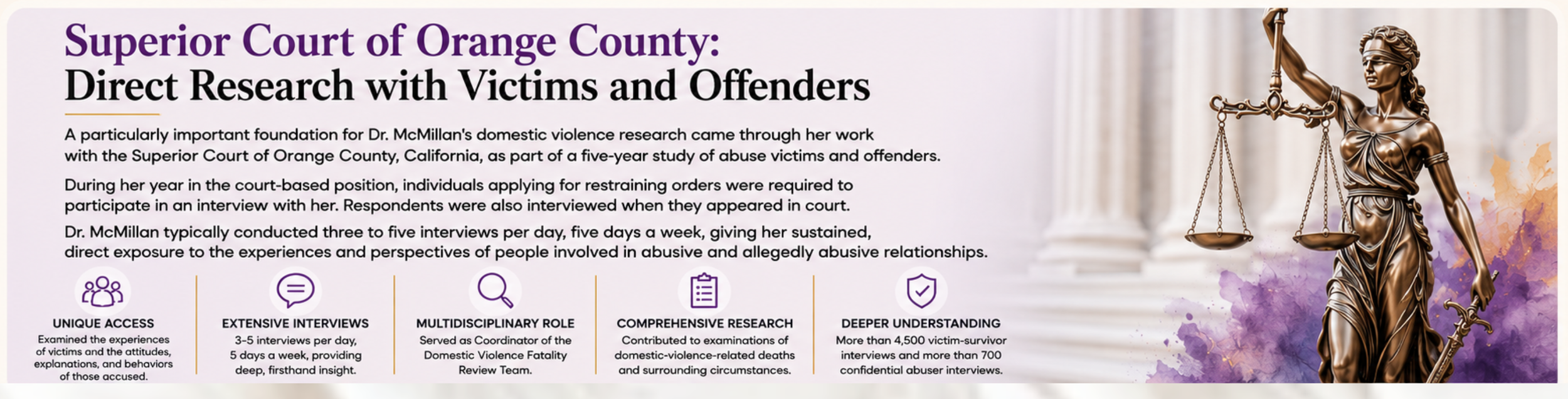
The court research provided something academic research alone could not: sustained, direct exposure to the experiences and perspectives of people involved in abusive—and allegedly abusive—relationships.
The Bigger Question Was Always Human Behavior
Dr. McMillan's work extends well beyond harmful relationships.
Across more than two decades, she has applied social and behavioral psychology to questions involving healthy relationships, partner selection, interpersonal decision-making, manipulation and social influence, workplace relationships, bias, communication, gambling harm, leadership and behavioral risk.
The common thread is simple:
People make better decisions when they understand the human behavior behind what they're seeing.
Her professional experience has included work across government, courts, law enforcement, regulatory agencies, nonprofit organizations, universities, professional education, community services and media.
GOVERNMENT & REGULATION.
Commissioner, Victorian Commission for Gambling and Liquor Regulation
COURTS & LAW ENFORCEMENT
Research, judicial education, professional training and law-enforcement engagement
RESEARCH & POLICY
Behavioral research, policy development, regulatory decision-making and assessment
AUTHOR & EDUCATOR
Books, international presentations, professional education, media and public communication
THE McMILLAN METHOD
Translating decades of research and experience into practical tools people can use themselves
International Experience. Practical Application.
United States • Australia • New Zealand • United Kingdom • Europe
Now based in Nashville, Dr. McMillan brings more than two decades of professional experience in Australia—as well as work across the United States, New Zealand, the United Kingdom and Europe.
Understanding Abuse From Both Sides of the Relationship
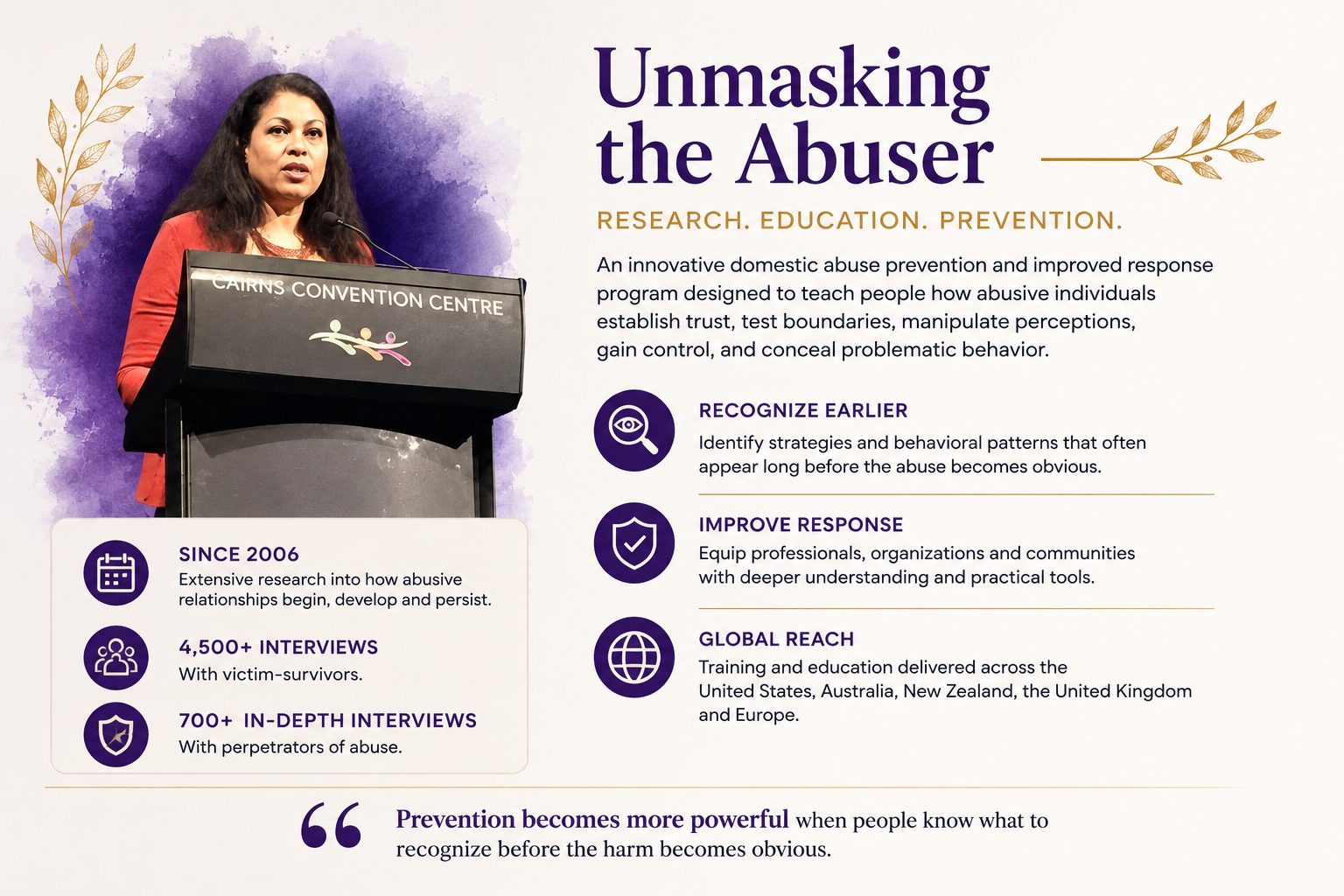
Since 2006, Dr. McMillan has conducted extensive research into how abusive relationships begin, develop and persist—including approximately 4,500 interviews with victim-survivors and more than 700 confidential, in-depth interviews with perpetrators of abuse.
Her objective wasn't simply to describe abusive behavior after it occurred.
It was to identify the strategies, behavioral patterns and relationship dynamics that appear earlier—including the ways abusive individuals establish trust, test boundaries, manipulate perception, gain control and conceal problematic behavior.
That research became the foundation of Unmasking the Abuser, an innovative domestic-abuse prevention and improved-response approach designed to help people recognize danger sooner and help professionals better understand what they're seeing.
Her education and professional training in this area has reached audiences across the United States, Australia, New Zealand, the United Kingdom and Europe, including law enforcement, judicial and professional audiences.

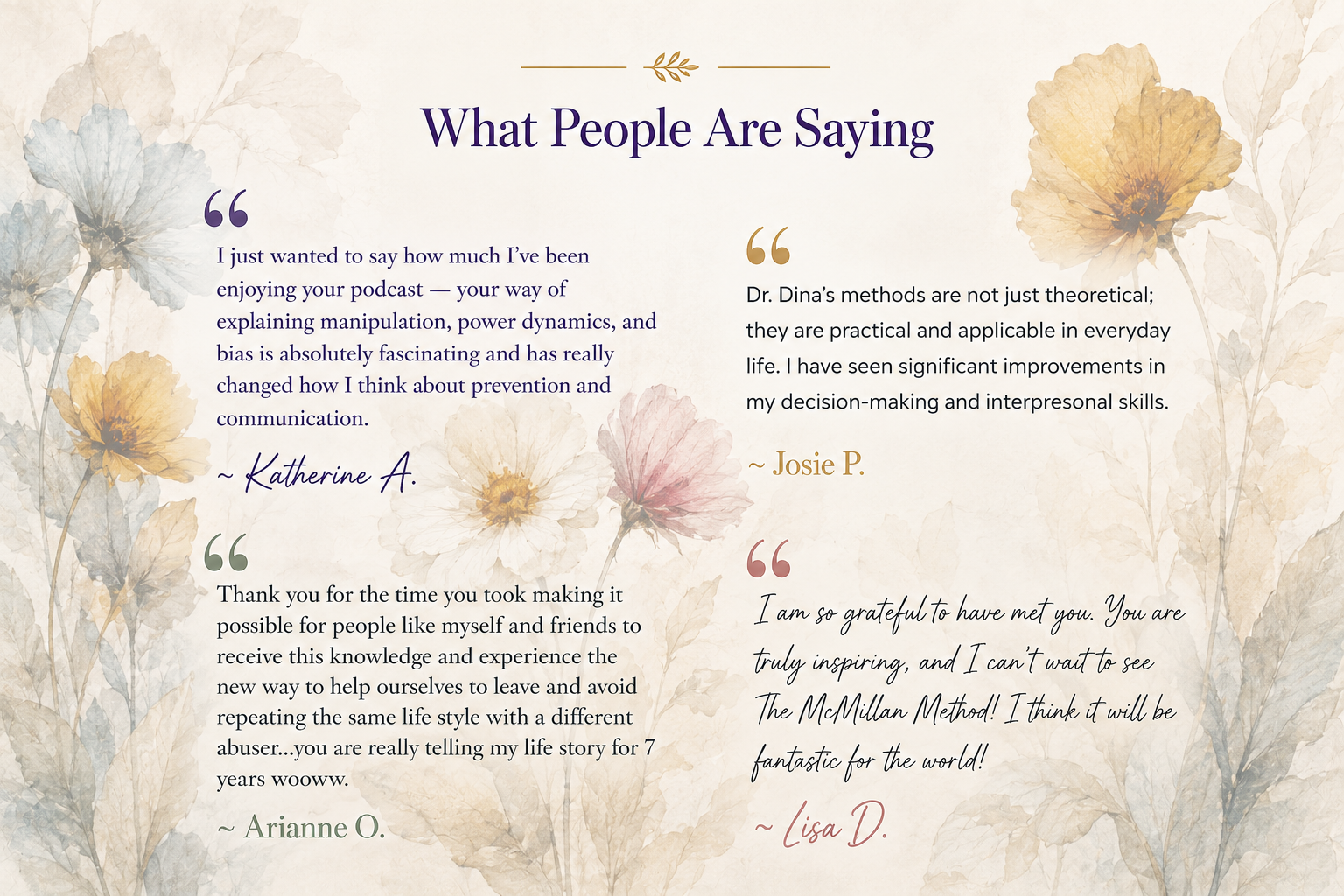
What Happens When Knowledge Becomes Useful
Research matters. Credentials matter. But ultimately, the value of this work is measured by what people can do differently once they understand it.
What Does This Mean for You?
You don't need decades of behavioral research.
You don't need to interview thousands of people.
And you don't need a Ph.D. in social psychology to recognize the patterns that matter.
That work has already been done.
The McMillan Method turns decades of behavioral research and real-world experience into practical tools that help you examine the relationships in your life more clearly and objectively.
Not to tell you whom to love.
Not to tell you whom to leave.
Not to make your decisions for you.
To help you see more clearly so you can make those decisions for yourself.
Whether you're wondering about a romantic relationship, friendship, family relationship or workplace situation, you can start by examining what's actually happening—not simply what you hope, fear or assume it means.
Looking doesn't mean leaving.
It means knowing.
And once you know, you can decide.
See clearly. Choose wisely. Live better.