
 Image 1 of 1
Someone can look cared for in public while having very little room to choose in private.
A charming partner. A convincing explanation. Smiling photographs. Offers of help. These can be genuine observations—and still leave important questions unanswered.
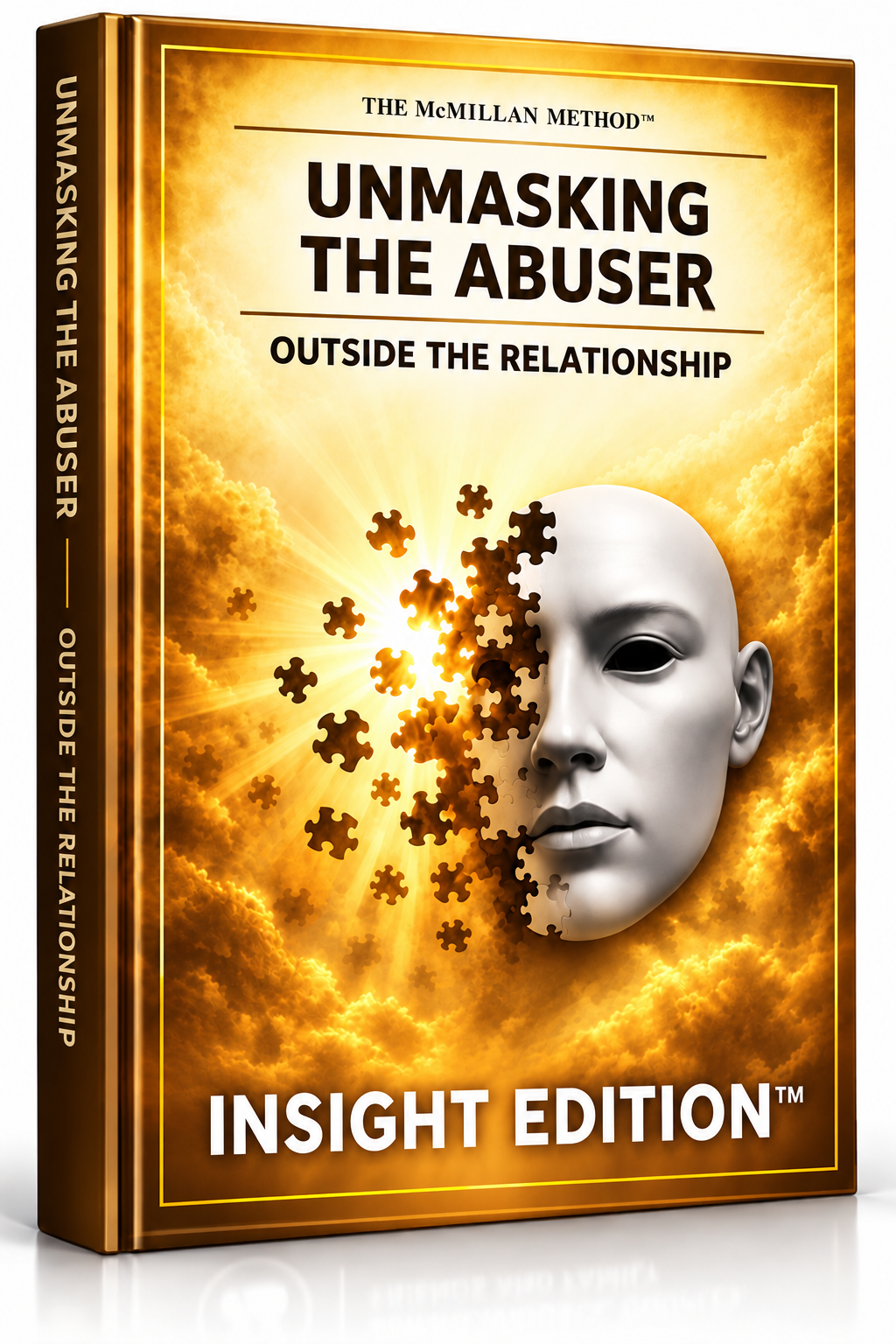
The Unmasking the Abuser Outside the Relationship Insight Edition helps you understand how manipulation and control may appear to an outsider, how they can remain concealed, and how your own response may become part of the situation.
It brings the Unmasking the Abuser framework into the observer’s perspective, exploring fourteen core tactics and what an outsider might realistically notice.
Inside, you’ll examine:
Public warmth and private rules: why what you see in one setting cannot establish the whole relationship.
Selection and seduction: how apparent compatibility, helpfulness or shared values may shape the story others accept.
A disappearing private voice: how attendance, interruptions, calls, corrections and questions afterward can affect opportunities to speak freely.
Support becoming dependence: connections between practical help, reduced alternatives and increasing access.
Testing, consequences and adaptation: changes that may become visible in what the person stops doing.
Misdirection and misattribution: how explanations can draw attention away from conduct or give controlling behavior a reassuring meaning.
Recruiting allies: how caring outsiders can be drawn into carrying messages, defending the partner or pressuring the person.
After separation: why the observer’s concerns and responsibilities may change when the relationship ends.
The edition teaches you to connect observations while respecting what remains hidden.
Examples, a tactics map and McMillan Method insights help you distinguish an incident, a sequence and an independent safety concern. Guidance addresses friends, relatives, colleagues and professionals, including the importance of supporting someone without taking over.
You don’t need complete certainty to seek specialist guidance. You do need to remain careful about what you know, what you infer, and what your actions could set in motion.
Created by Dr. Dina McMillan. Digital educational resource, readable independently or alongside the Outside Assessment and Guide, sold separately. Not a diagnosis, prediction of violence or substitute for safeguarding procedures. Professional and organizational use requires appropriate licensing.
What it is: A deeper exploration of patterns, limits and choices when viewing a concerning relationship from the outside.
Who it’s for: Friends, family members and professionals who want more context for supporting someone without overclaiming what they know.
This downloadable PDF Insight Edition can stand alone or accompany the Outside the Relationship assessment and guide. It is an educational resource for careful reflection.