
 Image 1 of 1
When a relationship holds so much promise, it can be difficult to know which concerns deserve your attention.
You’ve completed the assessment. Now you may be wondering whether the experiences it brought together are ordinary adjustments—or signs that your freedom is beginning to narrow.
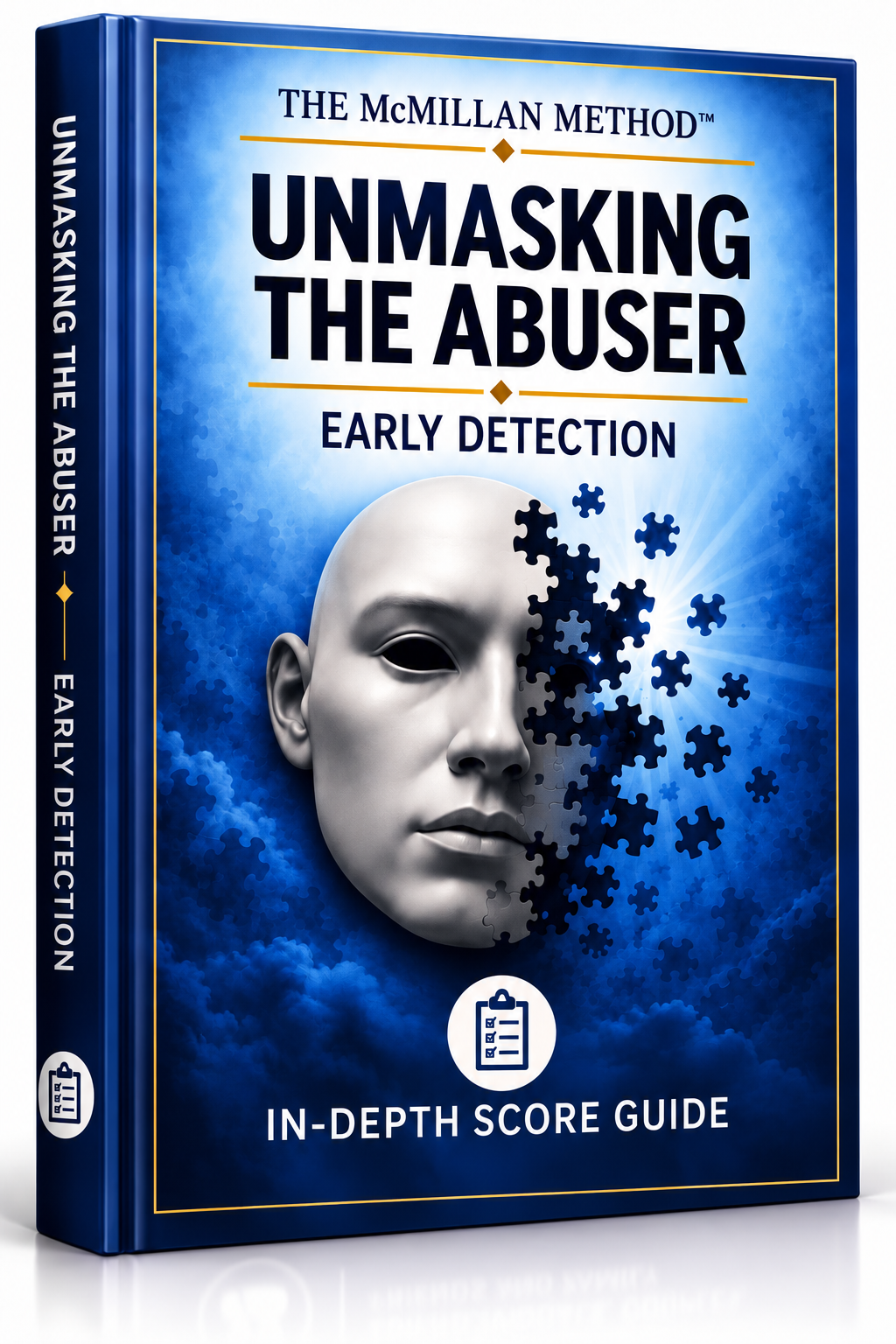
The Early Detection Score Guide helps you understand your result and examine the developing relationship more closely.
You’ll explore:
The promised future and the present reality: whether the life being described is influencing you to overlook conduct happening now.
Small requests and repeated pressure: what happens after you decline, and whether your answer actually changes the outcome.
Help and practical dependence: whether assistance leaves you with more choices or makes independence harder.
Support that quietly weakens other relationships: how encouraged suspicion or conflict can reduce your outside connections.
Warmth, withdrawal and compliance: whether restoring closeness increasingly depends on giving in.
Changes in you: the plans, opinions or preferences you’ve begun setting aside to avoid a reaction.
The guide explains the result labels, the connections the assessment looks for, and why safety notices deserve attention regardless of the broader finding.
It helps you keep an observation visible when a reassuring explanation makes it tempting to forget.
You’ll also find a practical pattern check, guidance on preserving results safely, and options for discussing concerns with a trusted person or qualified professional.
You don’t have to abandon hope to examine evidence. Understanding what is developing can help you make your next decision with greater care.
Looking Doesn’t Mean Leaving.
Our goal is to help you see the patterns in your relationship, understand what they mean, and offer guidance, if you choose, as you decide on your next steps.
Digital companion to the Early Detection Assessment, sold separately. Educational guidance, not therapy, a diagnosis or a prediction of danger.