
WHAT YOU’LL LEARN
See the early stages differently.
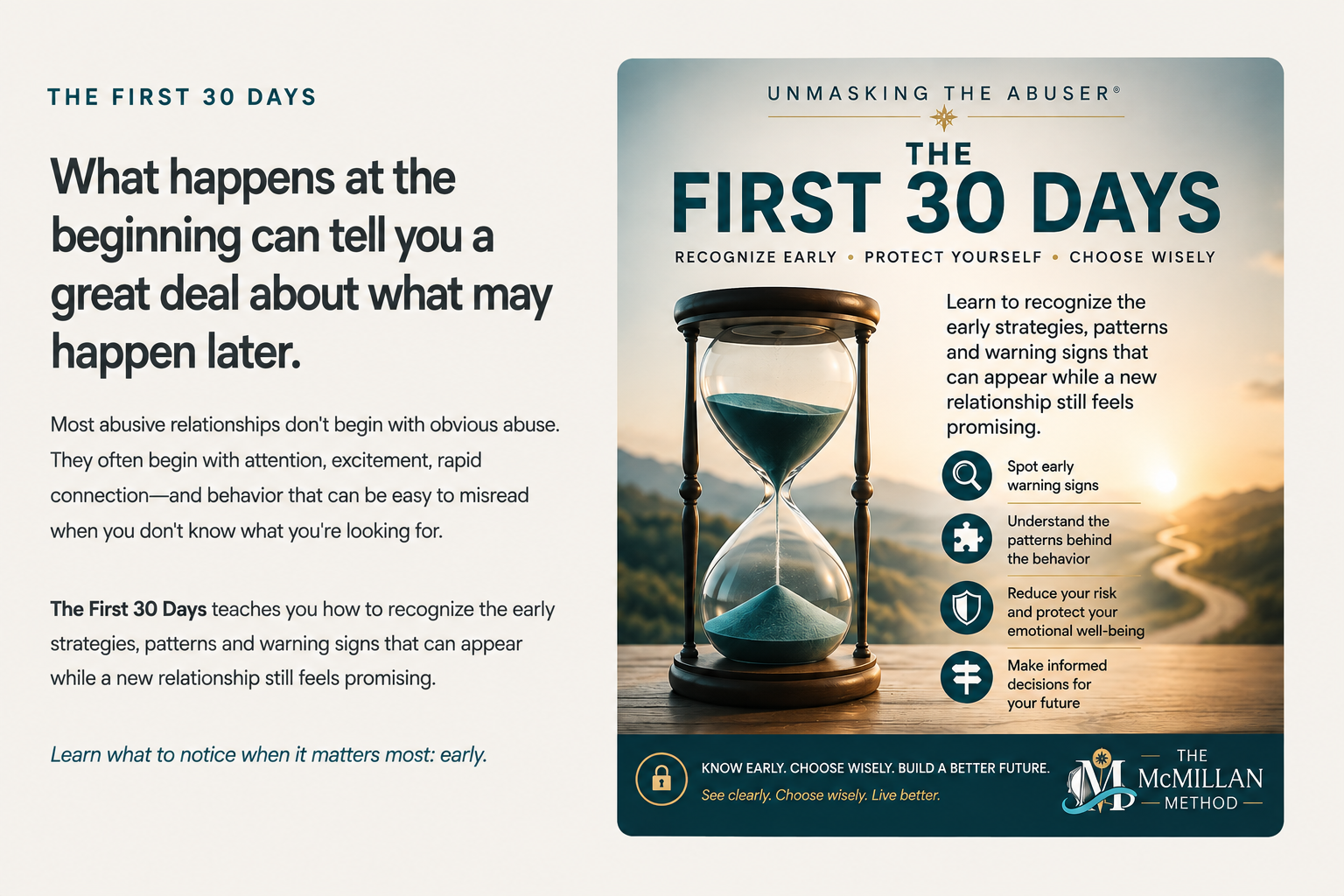
The First 30 Days takes participants inside the early development of a potentially abusive relationship—when concerning behavior can still be mistaken for attraction, intensity, protectiveness or commitment.
Participants learn how to:
Recognize early warning signs that are easy to overlook or misinterpret
Understand how trust and emotional attachment can be deliberately accelerated
Identify boundary testing and what a person’s response to limits can reveal
Recognize information-gathering that may later be used to manipulate or control
Distinguish healthy relationship development from patterns designed to create dependency
Understand the psychology behind common manipulation and control strategies
Use what they observe to make more informed decisions before they become deeply invested
You don’t have to wait for a relationship to become obviously harmful before you start paying attention.
WHY THE FIRST 30 DAYS MATTER
Early behavior can reveal patterns that are much harder to see later.
The beginning of a relationship is often when people are most focused on chemistry, compatibility and possibility. It can also be a period when important behavioral patterns first appear—but are easily explained away because the relationship feels exciting and promising.
As emotional attachment grows, it can become harder to evaluate concerning behavior objectively. Actions that might have raised questions early can gradually become normalized, rationalized or viewed in isolation rather than as part of a developing pattern.
The First 30 Days teaches people to notice the pattern while they still have the greatest freedom to decide what to do with what they see.
Early clarity can change what happens next.
WHO THIS COURSE IS FOR
You don’t need to be in an abusive relationship to benefit from learning how one develops.
The First 30 Days is designed for people who want to understand relationship behavior before serious problems develop—as well as those who want to better understand patterns they have experienced in the past.
This course may be especially valuable for:
People dating or beginning new relationships
People who have experienced a difficult, controlling or abusive relationship and want to reduce their vulnerability to becoming involved in another
Parents who want to help their teenagers and young adults recognize unhealthy relationship patterns
Teens and young adults learning to navigate dating relationships
Educators, counselors and other helping professionals
Domestic violence advocates and service providers
Law enforcement and justice professionals
Schools, universities and community organizations seeking practical prevention education
Prevention begins before someone needs help getting out.
READY TO LEARN WHAT TO LOOK FOR EARLY?
The First 30 Days is available now. Contact Dr. McMillan for information about upcoming sessions, enrollment and training options.